Lower Back Pain In Golfers: Causes & The Best Exercises To Fix It
Lower back pain is one of the most common issues golfers face, especially those who play frequently, spend long hours at the driving range, or return too soon after a break. Your lower back mechanics play a huge role in your swing, and when the load becomes too much, it can quickly become irritated.
The good news is that most cases of lower back pain in golfers can be improved with the right combination of load management, mobility, and strengthening. Here is what you need to know and what actually works.
What Is Lower Back Pain in Golfers
Lower back pain in golfers refers to pain that comes from the lumbar spine and the structures that support it. This region sits between the rib cage and the pelvis and plays a key role in stability, movement, and force transfer during the golf swing.
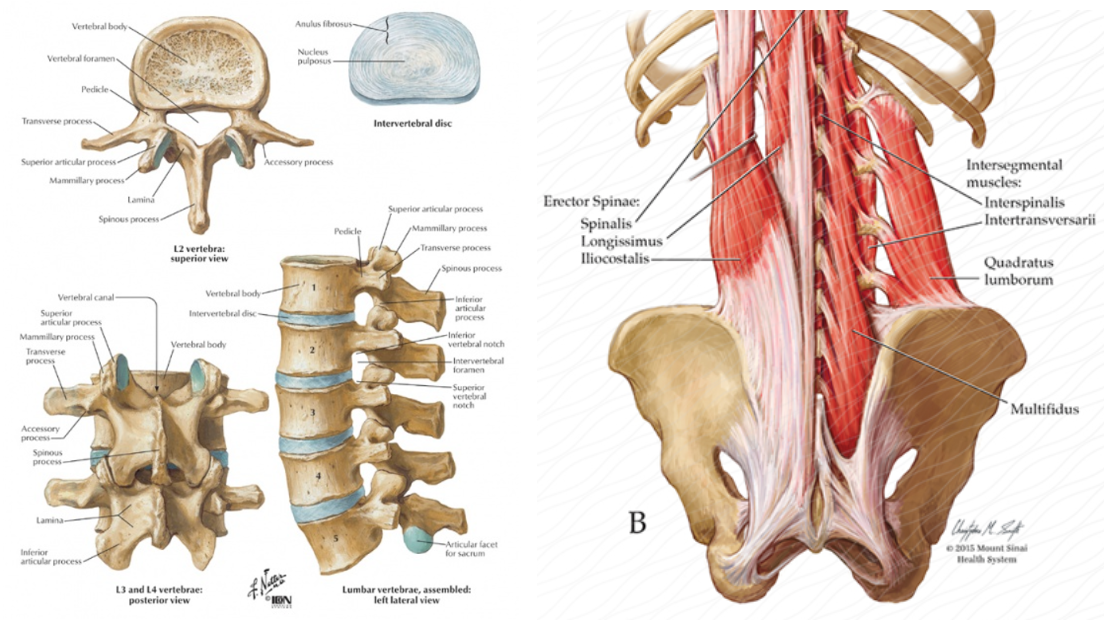
The lumbar spine is made up of five vertebrae stacked on top of one another. Between each vertebra sits an intervertebral disc, which acts as a shock absorber and allows the spine to move smoothly under load. At the back of each vertebra are small joints known as facet joints, which help guide movement and provide control. Surrounding these structures are muscles and ligaments that support posture and help control motion.
During golf, the lower back acts as a stable base while power is generated through the hips and transferred through the torso and arms. It is designed to tolerate controlled bending and limited rotation. When the demands placed on the lower back exceed what these structures can comfortably handle, pain can develop.
Lower back pain may present as an ache, stiffness, or sharper pain during or after a round. Some golfers notice discomfort when bending to tee up the ball, rotating through the swing, or feeling increasingly stiff as the round goes on. In most cases, this pain is mechanical in nature, meaning it is related to movement and loading rather than serious injury.
Understanding which structures are involved helps guide treatment and ensures the right balance of mobility, strength, and load management is used to reduce pain and restore comfortable movement.
Common Causes of Lower Back Pain
Lower back pain in golfers often relates to irritation of specific structures within the lumbar spine. Understanding which tissues are involved helps guide effective treatment and recovery.
Disc irritation
Intervertebral discs help absorb load and allow the spine to move smoothly. Repeated bending, twisting, and compression during the golf swing can irritate a disc, particularly when combined with long periods of sitting or sudden increases in play. This often presents as a deep ache or stiffness that worsens with bending or prolonged activity.
Facet joint irritation
Facet joints guide and limit spinal movement. Repeated extension and rotation, especially during the follow through, can irritate these joints. Facet-related pain is often felt on one side of the lower back and may worsen with arching or twisting movements.
Muscle strain
The muscles surrounding the lower back work hard to control posture and rotation during the swing. Fatigue or overload can lead to muscle strain, often felt as localized soreness, tightness, or spasm after a round or practice session.
Load-related irritation of multiple structures
In many golfers, pain does not come from a single structure. Instead, repeated stress and inadequate recovery can cause multiple tissues to become sensitive at the same time, resulting in ongoing or recurrent lower back pain.
Symptoms You Should Not Ignore
Most lower back pain in golfers is manageable, but certain symptoms need prompt assessment.
• Numbness or tingling in the leg
• Weakness in the leg or foot
• Bladder or bowel incontinence that wasn’t present before the onset of low back pain
• Numbness, pins and needles, or tingling in the saddle area (buttocks, genitals, perineum, inner thighs)
If you experience any of these, a physiotherapy or GP assessment is recommended.
The Best Exercises to Fix Lower Back Pain in Golfers
These exercises help improve mobility, reduce irritation, and build strength in the areas that support your swing.
Thoracic Rotation Stretch
Improves mid back mobility so your lower back does not over rotate.
Lie on your side with your knees bent and rotate your top arm across your body.
Glute Bridge
Strengthens the glutes, which reduces load on the lower back.
Lie on your back with your knees bent and lift your hips slowly.
Pallof Press
Excellent for core control during rotation.
Stand side-on to a resistance band. Grip the band with both hands, start with hands close to the chest, and extend arms until they are fully straight.
Dead Bug Exercise
Lie on your back with arms toward the ceiling and hips and knees bent. Push your lower back gently into the floor or mat. Slowly lower one arm and the opposite leg toward the floor. Return and repeat on the other side.
These exercises help restore balance and control so the lower back can handle the demands of golf more comfortably.
When to Seek Help
You should seek an assessment if:
• Pain lasts longer than one week
• The pain returns every time you play
• You cannot rotate or bend without pain
• Symptoms interfere with your swing
• You feel stiff the morning after playing
A physiotherapist can assess your strength, mobility, and swing demands to identify exactly where the overload is coming from and create a tailored plan to get you playing confidently again.
Final Thoughts
Lower back pain can be frustrating, but with the right approach it is usually very manageable. By improving mobility, strengthening key areas, and adjusting your golf load, you can return to playing pain free and protect your back long term.
If back pain is stopping you from playing your best golf, an assessment can help you recover quickly and prevent the issue returning.
