Golfer’s Elbow: What It Is And How To Fix It Fast
Golfer’s elbow is irritation or overload of the wrist flexor tendons on the inside (medial) side of your elbow. This irritation of a tendon is known as a tendinopathy .The tendon involved is called the common flexor tendon (as seen below). This is where majority of the wrist flexor muscles originate from. These tendons are apart of the muscles that help you grip the club, control your wrist, and generate power through impact.
When these tendons are overloaded faster than they can adapt, they become irritated, stiff, and painful. You will usually experience that pain with:
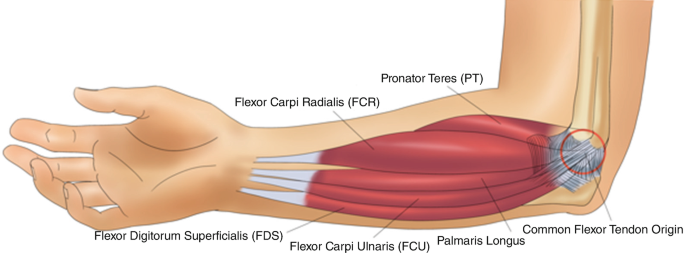
• Gripping the club
• Hitting balls at the driving range
• Lifting objects with your palm facing up
• Squeezing, turning, or twisting movements
Left untreated, this injury often becomes slow and stubborn. That is why early treatment makes a huge difference. Here’s some effective tips to help treat golfer’s elbow.
Reduce The Load But Do Not Stop Completely
Loading refers to how much stress or demand you place on your body. Every time you swing a club, lift an object or even walk you are loading your tissues. To help letting injured tissues heal, we need to reduce this load, this is called de-loading.
Many think de-loading is to rest completely, however this is incorrect. Complete rest doesn’t help tendinopathies as tendons need an optimal level of load to heal. This means loading the tendon too little or too much wont help, we need to find the optimal level of loading.
Making modifications to aggravating activities (e.g. playing golf) will de-load the tendon and help improve your pain.
Helpful load modifications include:
• Playing nine holes instead of eighteen
• Hit 50 balls instead of 100 balls at the driving range
• Swapping long irons for hybrids when playing
• Loosening your grip pressure slightly
A helpful rule of thumb is that if your pain spikes during activity and feels worse the next morning, the load was too high.
Start Targeted Strengthening
Strengthening paired with load management is the number one long term fix for golfer’s elbow.
I recommend starting with isometric exercises, these consist of holding a joint position with weight. These are used to help calm the tendon down, then progress to light resistance and eventually controlled eccentric work. Here are a few of my go-to exercises.
Stage 1
Wrist flexor isometric hold 4x30-40 seconds
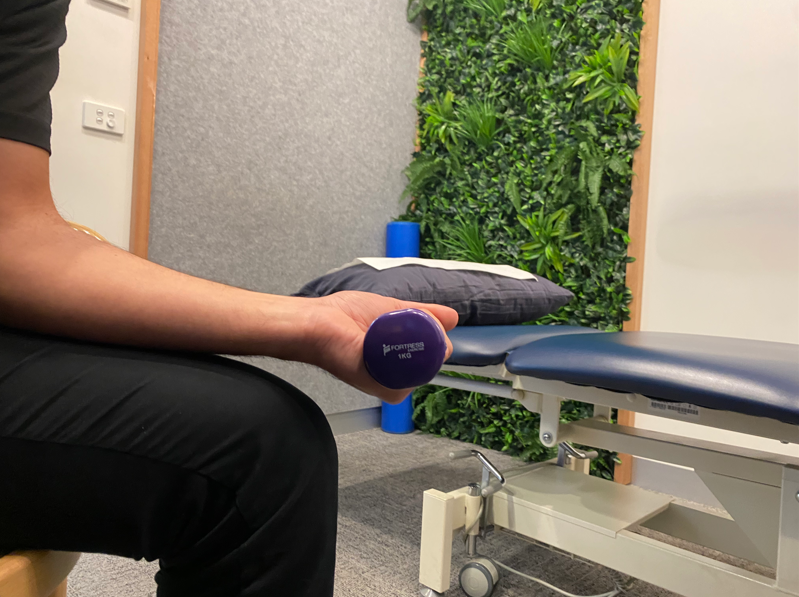
Rest your forearm on your thigh with your palm facing up.
Hold a 1kg weight in your hand. Feeling a little bit of pain is normal for this exercise. However it shouldn’t be more than 3 out of 10.
Hold for30-40 seconds and repeat four times
Stage 2
Wrist curls with a 1-2 kg dumbbell 2-3 x 12
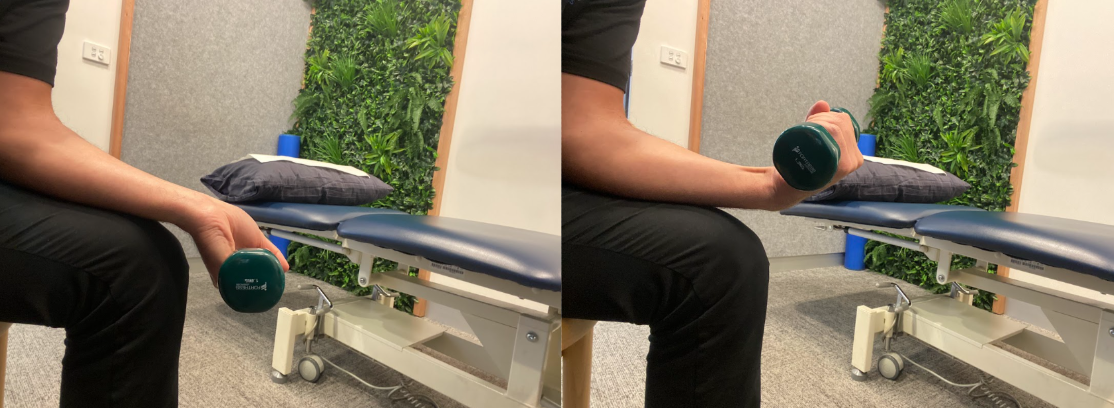
Move slowly on the way up and even slower on the way down.
Aim for twelve repetitions for two to three sets.
Stage 3
Eccentric wrist flexion 3x8
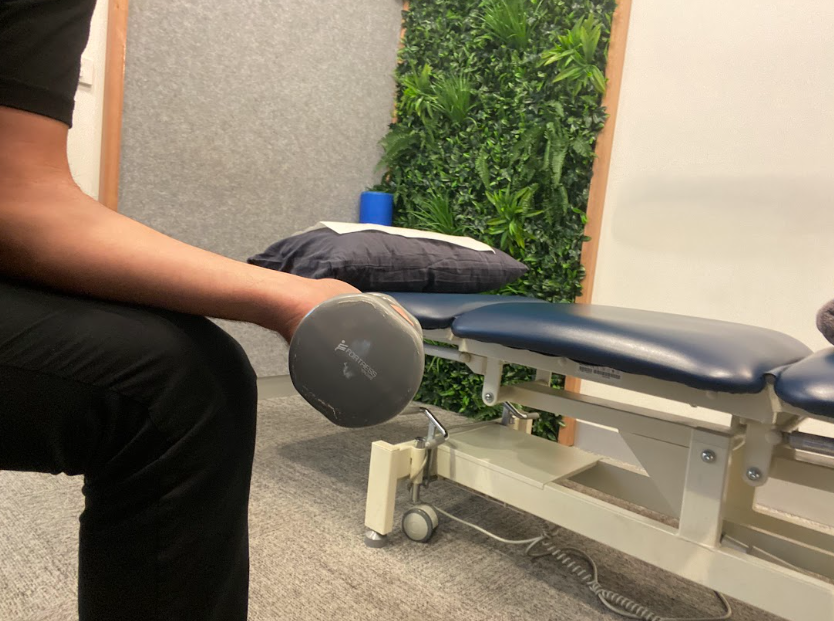
Hold a heavier weight 4-5kg. Use both hands to lift the weight.
Lower slowly using only the affected arm.
Perform eight to ten repetitions for two to three sets.
Loosen Tight Forearms
Gentle self release can help with the pain associated with golfer’s elbow. Although massage won’t treat the tendon injury itself, it can help with the associated aches and pain that come from the muscle belly. Here are some things that you can try:
Self massage
Use your thumb or a massage ball to gently release tight spots in your forearm.
Spend one to two minutes working through the area.
Note: try not to push on the inside of your elbow where the irritable tendon is. Aim to push on the middle of your forearm where the muscles are situated. These techniques should feel relieving, not painful.
Fix Contributing Issues
In most golfer’s, the condition is caused by a sudden increase in activity for the elbow, however in some golfers, the pain is a symptom of a musculoskeletal issue somewhere else in the body.
Common underlying contributors can include
• Limited wrist mobility
• Weak grip strength
• Reduced shoulder stability
• Stiffness in the thoracic spine
• Sudden spikes in playing or practice volume
Addressing these areas can improve the pain from golfer’s elbow and/or prevent the pain from returning.
A physiotherapy assessment can identify exactly which factors are affecting you so you can stop guessing!
Know When To See A Physio
You should seek an assessment if:
• Pain lasts longer than one to two weeks
• Your grip strength is dropping
• It hurts to lift light objects
• Pain is stopping you from playing
• The injury keeps returning
Treating golfer’s elbow early leads to a faster recovery and prevents the tendon from becoming chronic and slow to heal.
At Life Ready Camberwell, I assess your strength, mobility, grip mechanics, swing demands, and overall workload to build a personalised treatment plan that gets you back on the course confidently and safely.
Final Thoughts…
Golfer’s elbow is frustrating, but recovery is usually straightforward with the right plan. By reducing overload, strengthening the tendon, improving technique, and addressing underlying weaknesses, you can return to golf pain free and stay there.
If elbow pain is limiting your game, I can help you recover quickly and prevent it from returning.
